Seven pressure signals · Updated 4 August 2026
Where arrival
carries weight.
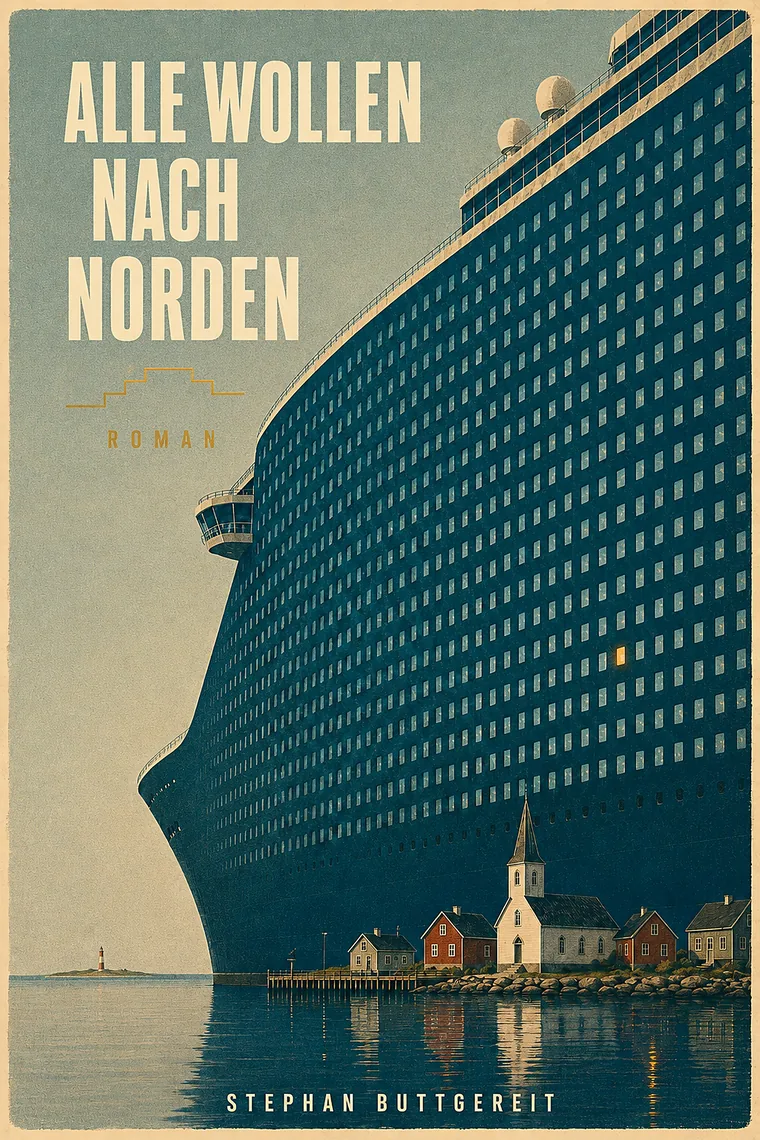
The novel follows the same route as thousands of other arrivals. This page looks at the moments when a visit becomes crowding – and a place has to defend its own pace.
Route · quick entry
Seven places, seven kinds of pressure.
No place makes sense as a single ratio. Each stop therefore starts with the signal that explains something real on the ground.
Method · updated 08/2026
One honest signal beats one beautiful, false number.
- Primary source first.Ports, municipalities and official statistics.
- Time frame visible.Actuals, forecasts and single events stay separate.
- No ranking.The signal explains the place. It does not crown a winner.
Editorial cut-off: 4 August 2026. Every link points to the source that directly supports the statement beside it.
01 · Tromsø · Annual volume
193,362 cruise passengers in 2025 180 calls · official port statisticsThe city carries the North as everyday life.
Tromsø is not scenery with a port attached. It is an island city with a university, hospital, buses and winter roads. The port recorded 193,362 cruise passengers in 2025. The scale is substantial.
Friction develops where several systems need the same small space: the quay, city centre, cable car, local bus and ordinary life. In the novel, Tromsø is therefore no northern finale. It is where the family begins to understand that “the North” is simply Tuesday for someone else.
02 · Stavanger · Capacity limit
8,000 maximum passengers per day max. 2 ships per day · 7 per weekA city that names its limit.
Stavanger turns pressure into an operating rule. The port publishes limits of 8,000 passengers and two cruise ships per day, plus seven calls per week. Its 2025 annual report records 263 calls, up from 236 the year before.
That says more than a visitor-to-resident ratio. A city translates acceptance into capacity. In the novel, Stavanger becomes the first lesson of the route: hospitality works better when it has a shape.
03 · Longyearbyen · Infrastructure
+35% port calls from 2015 to 2024 ocean cruise calls in the same period: +70%At the edge, every bottleneck becomes central.
Longyearbyen is a port, supply hub and point of departure at once. The strategic port plan reports 35 per cent more calls from 2015 to 2024; ocean cruise traffic increased by 70 per cent. Large ships also occupy a disproportionate share of scarce port capacity.
The municipality describes infrastructure not dimensioned for a modern family community plus large visitor numbers. From 2027, a visitor contribution is intended to help finance public infrastructure. That is the real friction: tourism is part of the future and has to support the systems that make it possible.
04 · Honningsvåg · Local value
2026 passenger fee in effect all passenger vessels · 2026 port termsNordkapp begins at the bus stand.
Honningsvåg is often read as a transfer point to Nordkapp. Since 2026, the port has charged every passenger vessel a per-passenger fee. The 2025–2028 financial plan introduced it as financing for new passenger facilities and a terminal; the same plan records limited bus capacity and the need for better places to wait in town.
The postcard lies thirty kilometres away. The work begins here. In the novel, that matters: the edge of the world has supply lines, shifts and invoices – and people whose home does not end with the last excursion bus.
05 · Olden · Peak days
5–6 critical days on Panoramavegen municipally documented pressure to actA small valley feels every bus.
For Olden, the abstract annual total is not the useful measure. Stryn municipality documents specific problems on Panoramavegen: more buses and visitors from cruise ships, plus five to six peak days requiring immediate measures.
That makes friction visible without turning the village into a victim. The port creates income; the same movement consumes roads, paths and Briksdalen. In the novel, Olden is the most beautiful test of whether wonder can still leave room for proportion.
06 · Molde · Compression
1 week the city in festival mode cultural intensity, not permanent pressureThe exception belongs to the city's identity.
Molde is the counterexample in this research. During festival week, parks, squares, cellars and the museum become stages. It creates density, but an institution the city has built over decades carries that density.
Molde therefore gets no invented pressure score. The relevant distinction is between a shared exception and an arrival that simply passes through. In the novel, Molde is opening note, weather change and sound – not evidence for a thesis that does not fit.
07 · Bergen · Crowding
10–2 peak hours in the city centre about 6,000 guests at once on the busiest measured dayA large city can narrow to one hundred metres.
Bergen now counts how many cruise guests actually disembark and where they go. Depending on the weather, 65 to 80 per cent come ashore; roughly half are in the city centre between 10 am and 2 pm. On the busiest measured day, about 6,000 passengers were present at the same time.
Bergen supplies the clearest image on the route: the annual total alone does not decide the pressure. Its geometry in time and space does. Bryggen remains World Heritage site, workplace and photograph at once. The novel looks directly into that gap.
The through-line
The figures live here. The people live in the novel.
Alle wollen nach Norden does not turn the route into an indictment. It brings one family to the same quays and lets them slowly understand that every beautiful place already had a life before they arrived.
A second look. Open the route →